








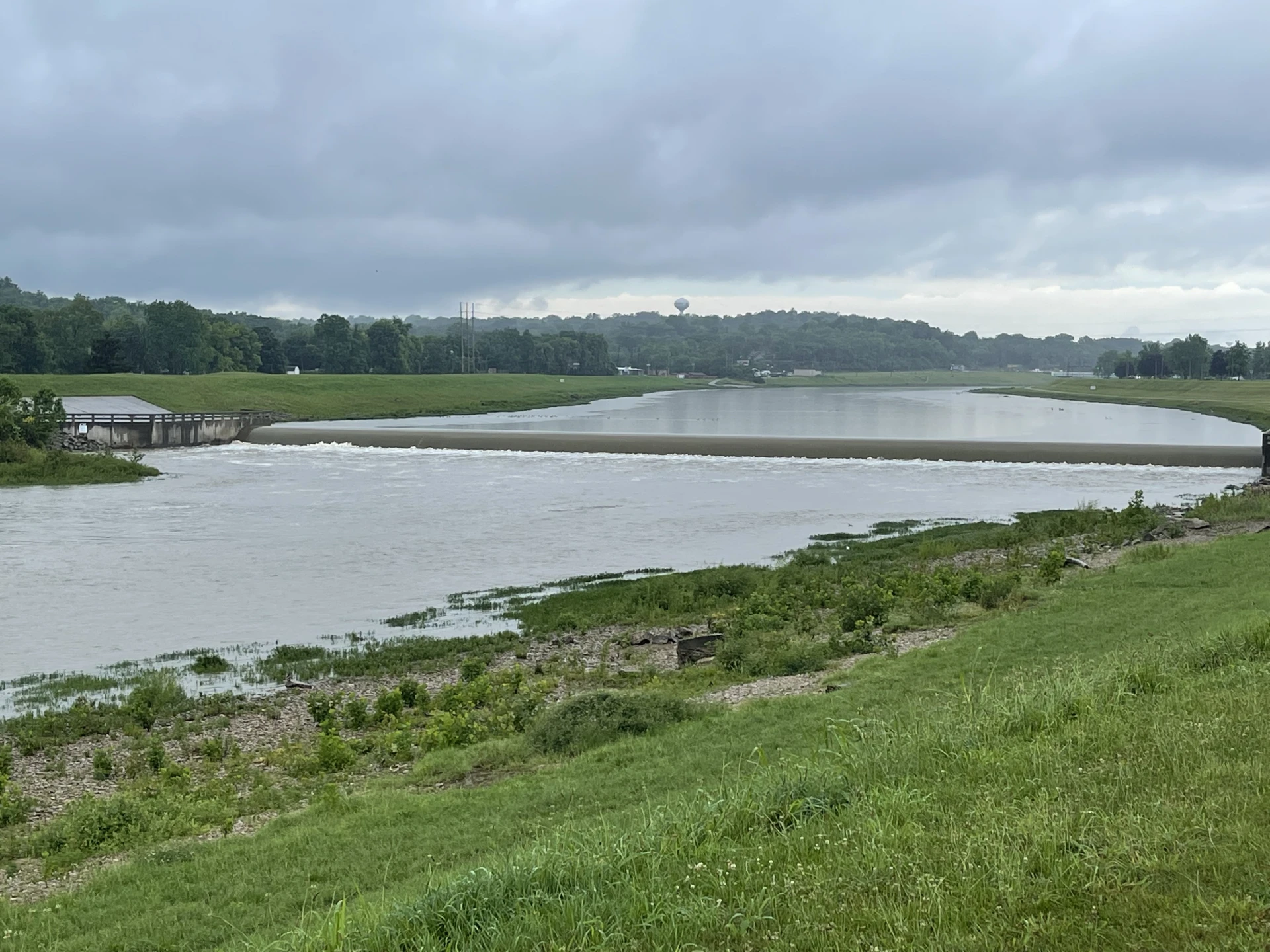
HAMILTON— The City of Hamilton and the Miami Conservancy District have received a major boost in their efforts to restore the Great Miami River, securing $2.45 million in H2Ohio Rivers Program funding. The grant launches Phase I of the Lower Great Miami River Restoration Initiative and paves the way for the full removal of the Hamilton Low Dam.
The project, a partnership between the City of Hamilton, Miami Conservancy District (MCD), MetroParks of Butler County, the U.S. Fish & Wildlife Service, and the Hamilton Community Foundation, aims to restore a free-flowing stretch of the river through Hamilton. Since the initial funding application, detailed engineering has refined the total project cost to $7.66 million. “This grant is the green light Hamilton has been working toward,” said Craig Bucheit, City Manager for the City of Hamilton. “The Great Miami River is one of Hamilton’s greatest natural resources. For years, we’ve talked about increasing recreational opportunities and driving riverfront development, but a major concern has always been the danger created by the existing dam. What’s particularly exciting about this project is the opportunity to replace that structure in a way that improves safety, increases recreation, and helps restore the river.”
A Key Step in River Restoration
Located south of downtown, the Hamilton Low Dam is the first barrier encountered by fish and paddlers traveling upstream from the Ohio River. Its removal will reconnect approximately 33.7 miles of river, allowing it to flow freely once again. The initiative is designed as the first phase of a broader restoration effort. Just upstream, MCD’s Two Mile Dam is scheduled for removal or modification through an Ohio Department of Transportation project starting in fiscal year 2027, creating a rare opportunity to restore a longer continuous stretch of river.
Restoring a Healthier River
Constructed in the late 1980s for recreational boating, the Hamilton Low Dam transformed a naturally flowing river section into a slow-moving, pond-like pool. This has resulted in warmer water, reduced oxygen levels, and altered habitat conditions.
The restoration project will:
- Remove the dam structure
- Rebuild a natural riverbed featuring gentle rapids and deeper pools
- Restore natural movement of sand and gravel downstream
- Improve water temperature and oxygen levels for fish and wildlife
- Maintain an upstream pool to support rowing activities throughout most of the year
- Significantly enhance safety for river users
Ohio EPA data indicates the river is notably healthier downstream of the dam than upstream, highlighting the structure’s environmental impact.
Improving Safety and Recreation
Low-head dams like Hamilton’s are notorious for dangerous recirculating currents. The Hamilton Low Dam has been linked to multiple drownings and rescues over the years, including a fatal incident in July 2025.
Removal of the dam will eliminate this hazard, allow seamless passage for paddlers and boaters, and improve safety for anglers, recreational users, and first responders.
The project also aligns with Hamilton’s riverfront development goals, including better public access, enhanced trail connections, and a stronger role for the city in the Great Miami Riverway.
Strong Partnerships and Funding Outlook
The City of Hamilton serves as the lead applicant, managing grants, contracts, and finances. The Miami Conservancy District, which owns the dam, will oversee engineering, permitting, construction, and long-term river management. Burgess & Niple is providing dam removal and river restoration expertise.
Project partners are actively seeking additional funding to cover the remaining gap and complete the full $7.66 million project in one phase. Potential sources include the Ohio EPA Water Resource Restoration Sponsor Program, the U.S. Fish & Wildlife Service National Fish Passage Program, and local support. The City has also committed to helping secure any unfunded costs consistent with a 1987 agreement with MCD. Construction is targeted for 2027–2028 following final design, permitting, and full funding. “This is a defining moment for the Great Miami River in Hamilton,” said MaryLynn Lodor, General Manager of the Miami Conservancy District. “By removing the lowest barrier on the river, we’re not just improving one location — we’re unlocking the potential of the entire river system.” This project helps reconnect a region to its river,” Lodor added. “It restores ecological function, protects lives, and creates new opportunities for people to experience the river. It’s an investment in the future of Hamilton and Southwest Ohio.”
(Editor's Note: AI-Assisted Copy)